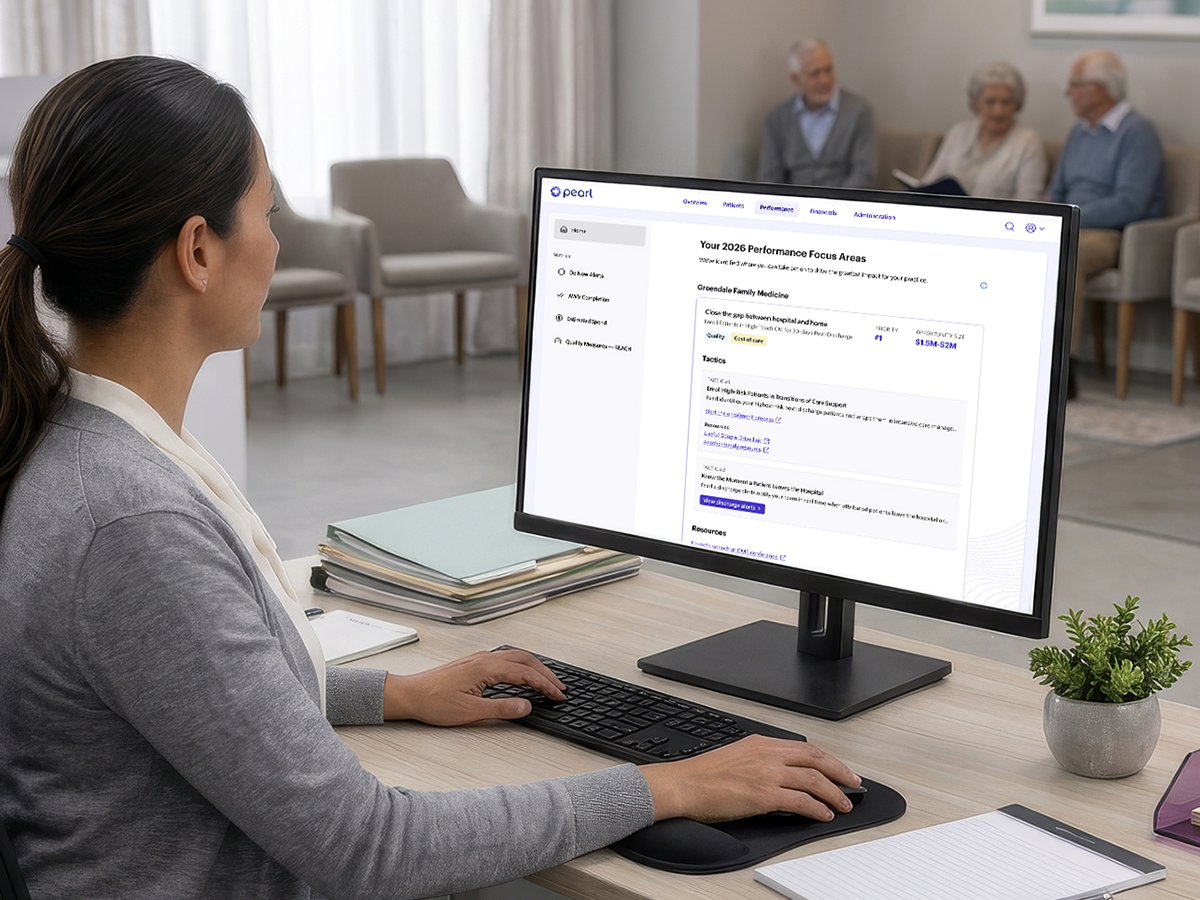
Join thousands of providers partnered with Pearl to succeed in value-based care with actionable insights, financial modeling, AI workflow automation, and aligned incentives.
250,000 Beneficiaries | 10,000 Providers | 40+ States
Pearl combines the data, workflows, financial strategy, and incentives needed to make value-based care perform at scale.
Identify patients who could benefit from attention before costs rise or outcomes worsen.
Provide care teams with suggested next steps and automate administrative actions.
Optimize clinical quality and lower the total cost of care to drive financial results.
Leverage Pearl's portfolio of program options to maximize revenue and mitigate downside exposure.
Replace fragmented tools and one-size-fits-all approaches with a smarter system that turns Medicare participation into sustainable performance.
Extend success across your full Medicare population with payer-aligned workflows, actionable insights, and administrative automation.
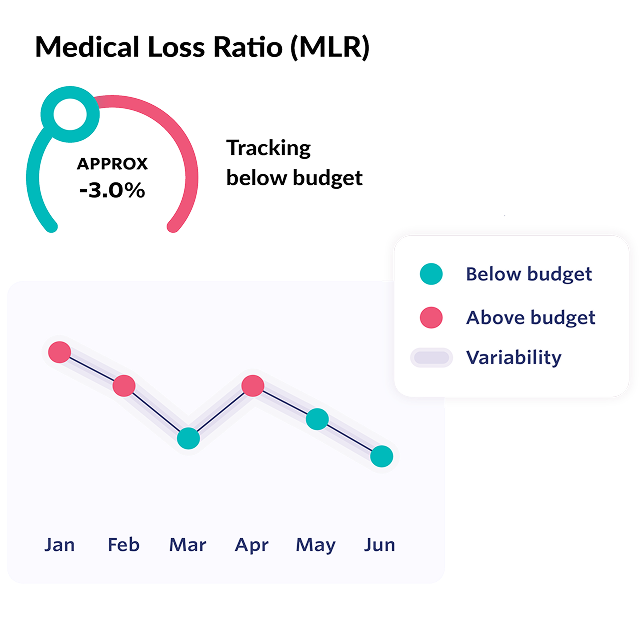
Medical loss ratio improvement in year one
Potential workload reduction
Healthcare premiums managed
Growth in lives covered year-over-year
Get things done with actionable insights, prioritized workflows and automated administrative actions.
Generate signals
Synthesize all claims, ADT feeds, EHR data, and patient trends.
Take action
Prioritize patients, get next steps, and automate mundane tasks.
Improve outcomes
Improve care, reduce avoidable utilization, and strengthen value-based performance.

Identify which patients need attention now before issues become emergencies.

Know what to do next, from follow-ups to care gaps to chronic condition support.

Streamline outreach, scheduling, and other administrative tasks.

Pearl connects with your existing EHR data and clinical workflows.

Monitor total cost of care, benchmark accuracy, quality, and site of service.
Designed to meet the highest data security standards.








Our partnership with Pearl Health has deepened our tech enablement capabilities, which allows our network of clinicians to reach a new plateau for delivering quality patient care.”

Shawn Armstrong, MHA
As Medicare and other healthcare payers shift payment models from traditional fee-for-service to value-based care, it is imperative that we gain experience in this space. We believe this collaboration with Pearl Health will help us provide high quality care to our patients at lower cost.”

Rodney Stout, M.D.
Pearl Health’s technology platform and services will enable us to better identify and manage the needs of our high-risk and rising-risk patients, improve our quality performance, and optimize PCPs’ revenue potential.”

Dr. Michael Synn
We have long focused on whole-person health through innovation and community partnerships. We’re grateful to have found a partner who shares the same philosophy and supports our efforts to improve health outcomes, patient satisfaction and overall care coordination.”

Brittany Silvestri, MBAH
As we look to the next decade of innovating and improving healthcare, I am thrilled to partner with Pearl to equip providers in our network with cutting-edge technology and data insights that will enable better patient care.”

TK Kennedy
With Pearl’s advanced predictive technology, primary care providers in our network will gain access to data and insights that empower them to proactively focus on these ACO patients who need attention most.”

Dr. Manoj Mathew
Our alliance with Pearl Health will enhance the knowledge and capabilities of our primary care providers, enabling them to adopt a more dynamic approach in their interactions with ACO patients.”

Gerard Filicko
Under the new Pearl model, we’ve been able to utilize care teams more effectively, and we get credit for all of the activities that we do. It's been able to free up time for some of our providers, so we don't necessarily have to see or take care of routine tasks.”

Dr. David LaMond
[Our] partnership with Pearl will be quite beneficial to my patients in terms of improving overall health outcomes, reducing costs, and also helping the practice to grow — in terms of exposure, in terms of letting people know what we do as a practice.”

Dr. Michael Odibo

Scale value-based care across networks without adding operational drag.

Give practices the tools, incentives, and workflows to perform together.

Earn more for proactive care while reducing administrative burden.
Join thousands of physicians using Pearl to lead the transitionto value-based care. Start with a complimentary roster analysis.

Pearl Health partners with providers and health systems to succeed in value-based care through technology, analytics, and operational enablement.
info@pearlhealth.com
Mailing Address: 244 Fifth Avenue, Suite #1846, New York, NY 10001