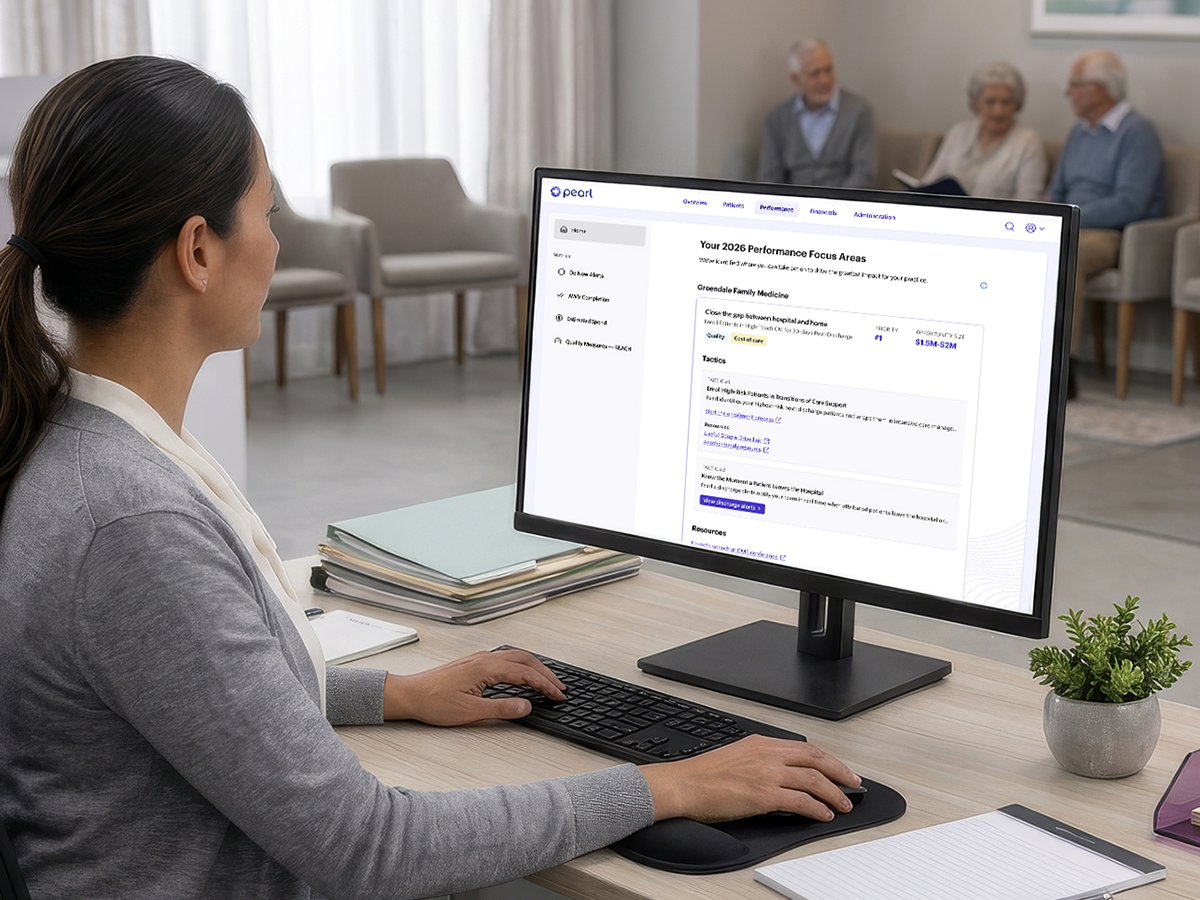
A care organization can have every relevant metric at its fingertips and still have the same question on Monday morning:, “Where should we focus next?”
That is the paradox of modern value-based care. Organizations have more data than ever on patients, utilization, quality, and financial performance. Yet turning that information into a focused plan, one that works for a specific practice, patient population, and set of operational constraints, remains difficult.
Earlier this year, we explored this challenge in Healthcare Doesn’t Have a Data Problem Anymore — It Has a Decision Problem, Healthcare has spent decades building systems. But more information, even routed more intelligently, does not guarantee easier or better decisions or outcomes.
Pearl’s Focus Areas are designed to close that gap. Now available in the Pearl Platform, Focus Areas surface the performance opportunities that matter most for an organization, explain the potential impact, and connect teams to actions they can take through Pearl.
From Information to Action
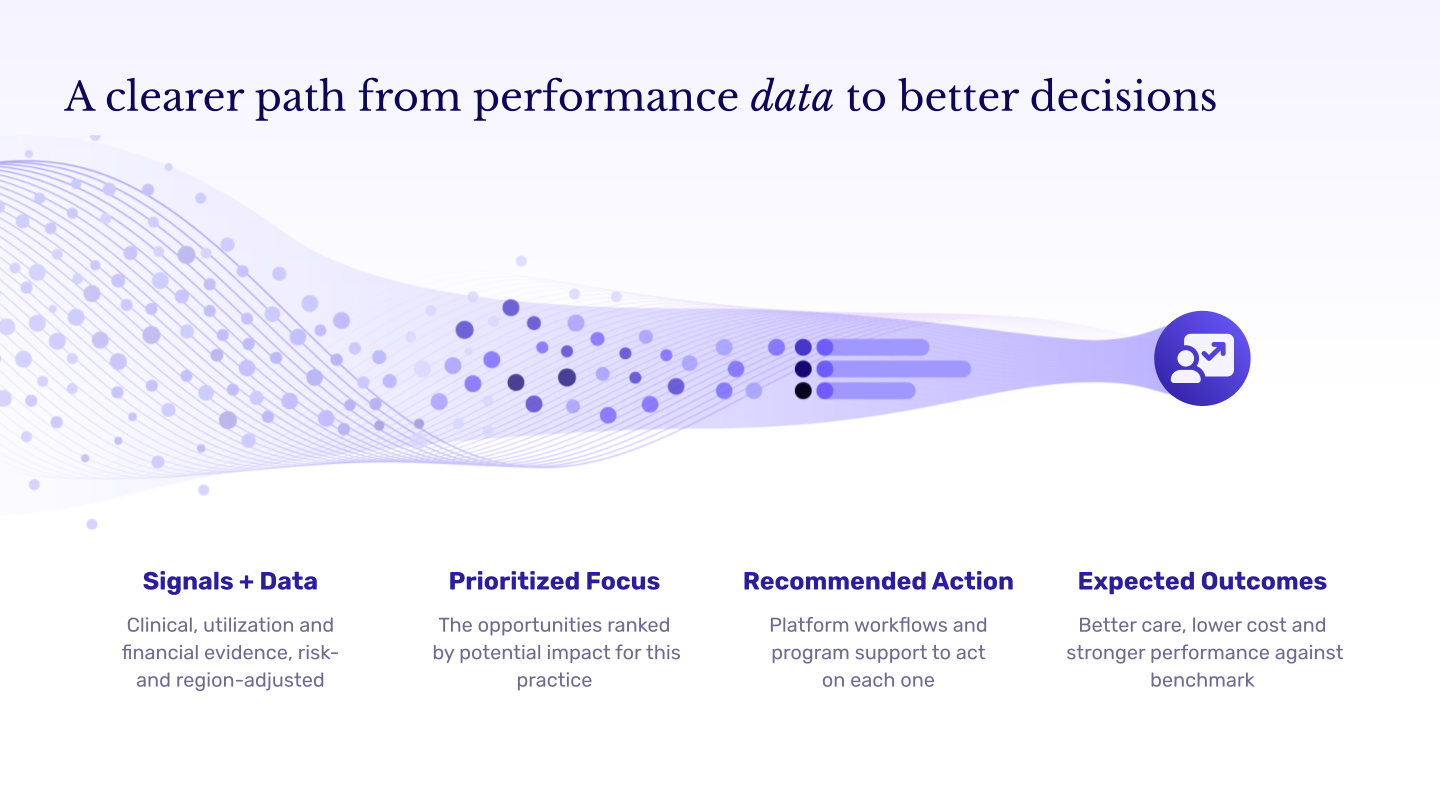
Each Focus Area helps address four questions:
- What is the opportunity? A clear, practice-specific performance priority.
- Why does it matter? Plain-language context.
- What can the team do? Relevant platform workflows and program support.
- What could change? Clinical, utilization, and financial measures.
Alongside an estimated range of potential financial improvement based on regionally adjusted benchmarks, teams can identify patients who need attention, access relevant workflows in the Pearl Platform, and engage with recommended programs and support in context. Rather than adding another dashboard to monitor, Focus Areas provide teams with a clear, practical starting point for action.
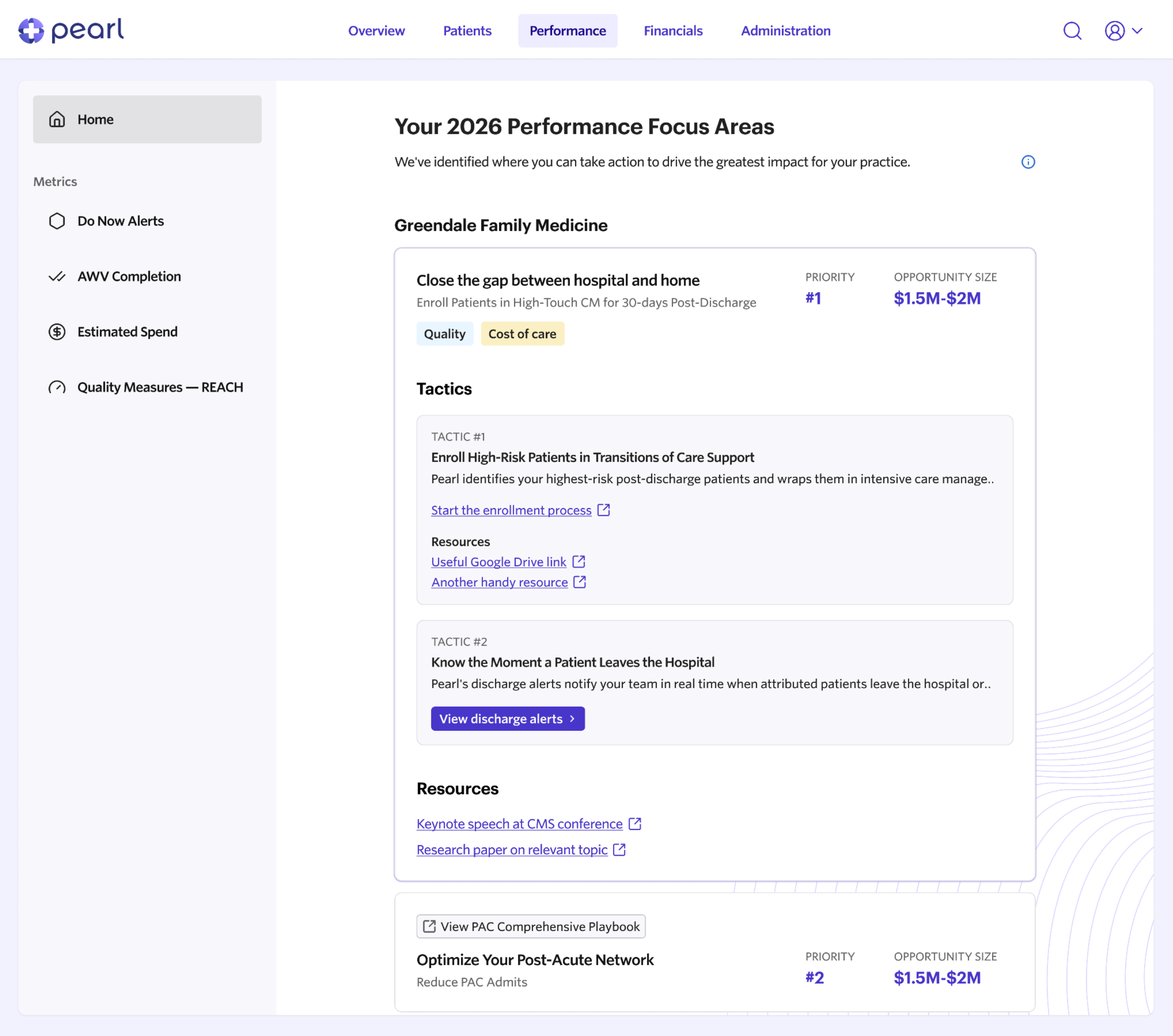
A Practical Example: From Vague Reports to Workflow Action
To make this concrete, consider a practice or health system with higher-than-expected hospital or emergency department utilization. Today's reports often flag that utilization is above target. But this leaves those delivering care to determine which patients to prioritize, what may be driving the trend, and which interventions are most likely to help.
A Focus Area turns that broad signal into a clear place to start. Instead of only showing high emergency department use, it may point to post-discharge care as an area to improve, show the potential financial impact, and identify patients who need timely follow-up. The team can then use Pearl workflows, alerts, and recommended support to take action.
Recommendations That Fit Each Organization
The prior example shows how a Focus Area turns a broad performance signal into a clear next step. But the right next step depends on the organization. A small independent practice, a multispecialty group, and a health system may be working toward similar goals, but they have different patients, resources, workflows, and constraints.
Fittingly, Focus Areas are built on Pearl’s Opportunity Sizing System, a method Pearl has refined across multiple performance years alongside its clients. Pearl’s experts and systems review available evidence and compare each practice’s performance with risk- and region-adjusted benchmarks. They then identify the opportunities with the greatest potential clinical and financial impact and connect them to tactics and support Pearl has curated for the practice.
Pearl uses this same method for both practice-level and network-wide goals. This provides organizations a shared way to make decisions while keeping each practice’s recommendations specific to its mix of needs. This puts Pearl’s Product Principles into practice: centering patient needs, connecting insight to action, and making complex performance information easier to use.
The result: years of analysis and refinement, distilled into a short list of practical next steps.
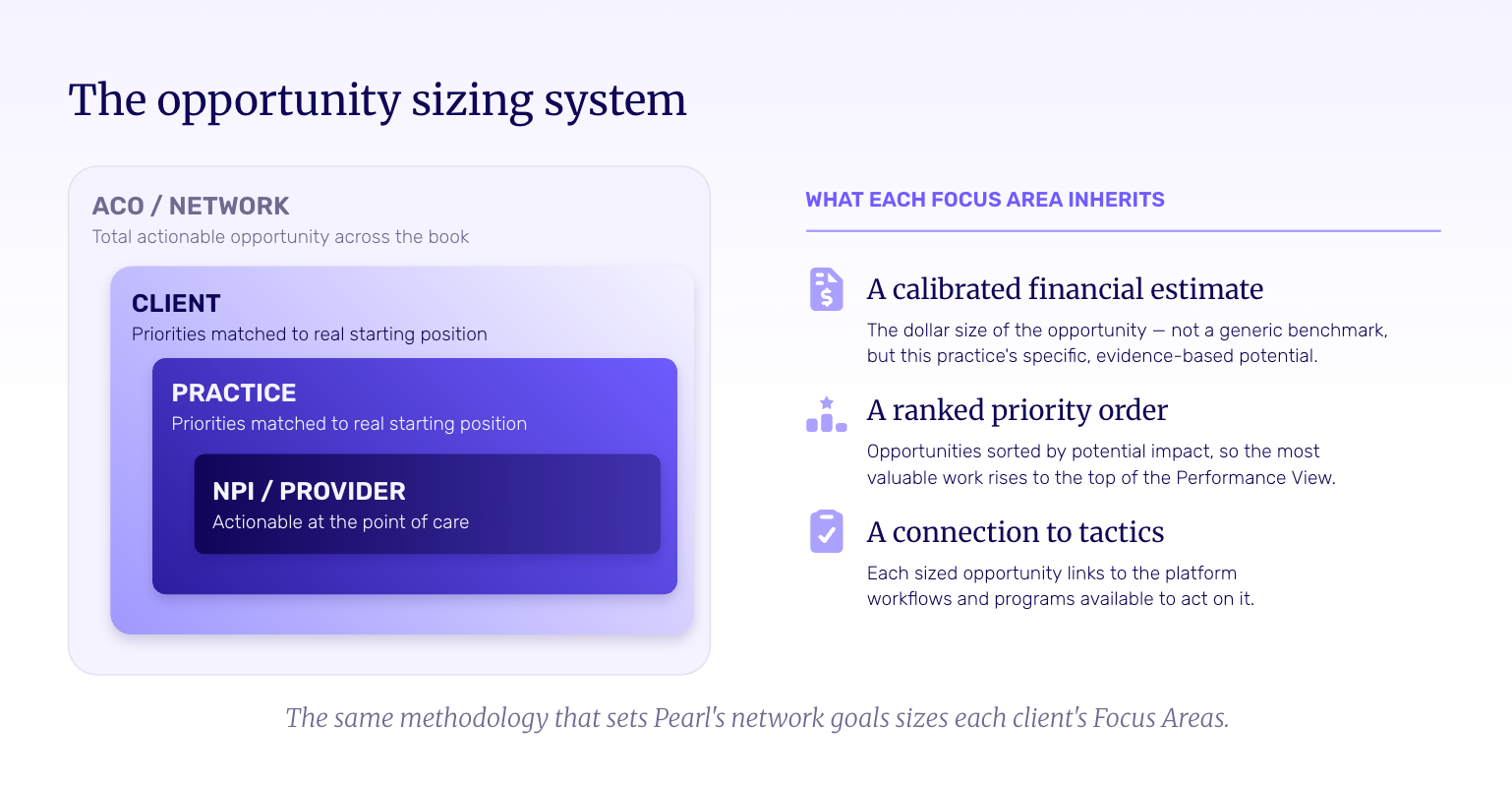
One Performance Language, from Practice to Enterprise
For physician organizations and health systems, the question is not only where to invest resources. It is whether care-management capacity, workflow support, and practice-level programs are helping where they matter most.
Focus Areas create a shared way to answer that question. Leaders can compare the opportunities facing different practices, the potential impact of available interventions, and the clinical, utilization, and financial measures connected to the work. This helps them direct resources to the areas of greatest need—and assess whether those efforts are improving performance over time.
That matters in value-based care, where clinical and financial outcomes are closely linked. Timely follow-up after a hospitalization, stronger support for high-risk patients, and better coordination across care settings can improve patient experience, reduce avoidable utilization, and support contract performance.
Focus Areas give organizations a clearer way to connect their investments in care to the results those investments are meant to produce.
How Pearl Is Continuing to Optimize Performance Management
With Performance Focus Areas, Pearl has taken an important step toward helping teams move from understanding performance to improving it.
Today, the Pearl Platform brings tailored priorities, context, and recommended tactics into one client-facing experience. Planned capabilities include advanced progress tracking, clearer views of performance changes, and conversational analysis.
Over time, the goal is a system that brings together clinical, utilization, and financial information to identify the right opportunities, recommend next steps, and show what is working. AI can help users explore that information, so long as it is grounded in evidence and real workflows.
This approach supports Pearl’s vision for proactive care: helping teams spot what needs attention earlier, spend less time sorting through data, and more time supporting the patients who need them most.

Pearl Health is powering the future of healthcare
We’re a team of physicians, technologists, and risk-bearing experts with a passion for enabling our partners to deliver better care and reduce health system costs. Want to learn more?