

TL;DR:
By removing certain risk factors in your life, you can statistically extend it. This article provides a brief overview of those factors and their impacts on longevity. The most important factors across demographics are: smoking cessation or avoidance, managing blood pressure, removal of excess body weight, reduction of blood sugar, and adequate exercise. Managing these risk factors well can extend life by approximately 9 years.
Acknowledgement
I want to thank Elliott Fisher for his time and work on this research and for pushing my own thinking around improving Medicare and population health.
Key Risk Factors
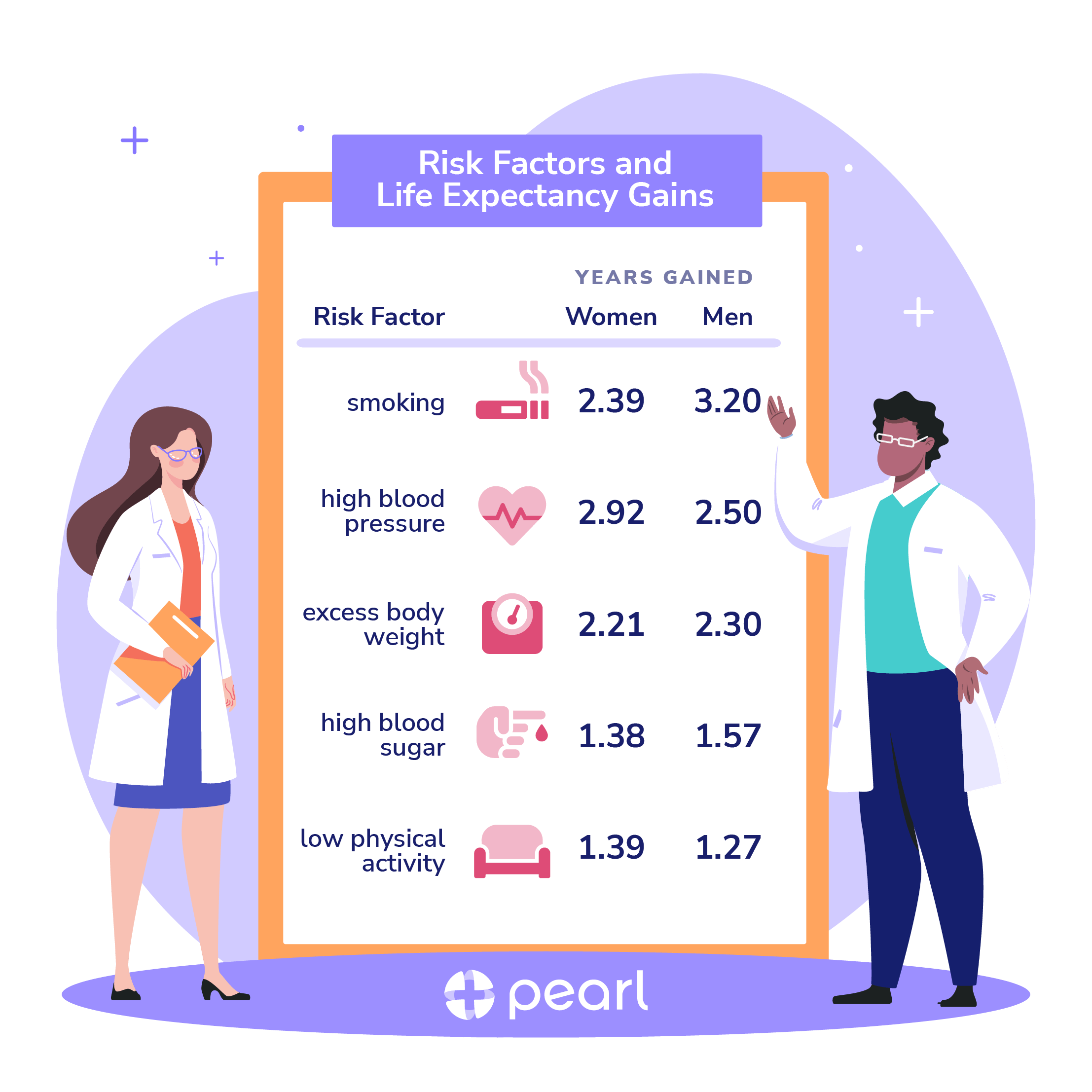
In their research on predictive models for modifiable risk factors of death as published in Population Health Metrics, Fisher, et al. studied data from more than 8,000 patients to isolate and determine key factors that might predict longevity. Their results (below) indicate that certain key factors can extend life expectancy and that joint effects of those factors can lead to differences of almost 9 years.
Results
Life expectancy gains in the US population (in years) by removing risk factors
In more practical and population health terms, clinicians and patients might think about how they can improve performance around the following variables to extend life expectancy.
Key Risk Factors Defined
List of risk factors with the corresponding exposure
Top Opportunities for Population Health Improvement
- Smoking — avoidance or smoking cessation is the strongest individual variable affecting human longevity, according to this study.
- High blood pressure — avoiding and managing high blood pressure conditions is the second most significant factor.
- Excess body weight — helping patients or focusing on proper body weight is the third most significant criterion. This can be a hard-to-measure concept; excess fat or BMI indices have often been used as proxies for this.
- High blood sugar — normal blood sugar levels (and avoidance of high blood sugar or diabetic conditions) is linked to more than 1 year of longevity.
- Physical activity — at least 2.5 hours per week of moderate physical activity or more than 1 hour per week of vigorous physical activity can substantially extend longevity. Beyond those amounts, there aren’t clear indications of gained longevity benefits.

Pearl Health is powering the future of healthcare
We’re a team of physicians, technologists, and risk-bearing experts with a passion for enabling our partners to deliver better care and reduce health system costs. Want to learn more?
